If you’re in Dorset and looking for a beach that’s the best of both worlds – a destination for fun, yet still feeling peaceful; a sandy shore with small shingle, not clunky great rocks to manoeuvre round; clean sea water for paddling in or swimming; good facilities yet not too touristy; perfect for adults, kids and dog-friendly, I’ve got a Jurassic treat for you!
Charmouth Beach – steeped in history AND seeped in sand, gentle shingle and crystal clear water – what else could you possibly need in a beach trip. Read on to find out more about this fabulous find – and what you might find there!!
Charmouth Beach is situated in Dorset and is a part of the Jurassic Coast – a beautiful stretch of coast along the south of England. The Jurassic Coast spans 95 miles from Exmouth in east Devon, to Studland Bay in Dorset and is England’s only natural UNESCO World Heritage Site. What does UNESCO stand for? Had to look this up – it’s United Nations Educational, Scientific and Cultural Organisation. What a fine accolade!
Why is it called The Jurassic Coast?
If Jurassic Coast makes you think of dinosaurs stomping through lush landscapes and chasing explorers – you’re not far wrong! It certainly makes me think of Jurassic Park! While you won’t find any pterodactyls swooping down onto the beaches, the cliffs tell an amazing story from a time when creatures like this did exist. (I had a super cute toy pterodactyl which was one of my favourite things to play with as a child I loved the fact that I could spell it too!!)
The Jurassic Coast is named after the Jurassic period, which was an incredible 201 million to 145 million years ago.
This significant time period is when many of the iconic sea creatures lived, such as ichthyosaurs, ammonites and plesiosaurs. Which, unsurprisingly is why the Jurassic Coast is a blooming amazing place to hunt for fossils. In fact areas such as Charmouth beach, Chesil beach and Lyme Regis are said to be among the BEST places in the world to discover the remains of these fascinating creatures!!
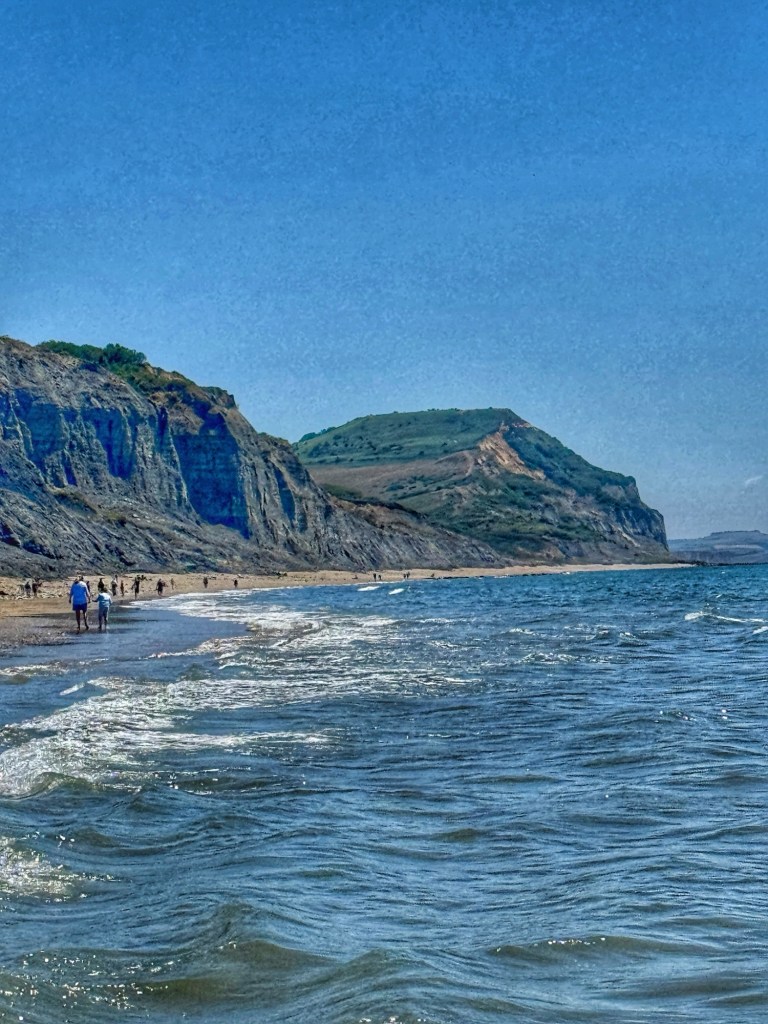
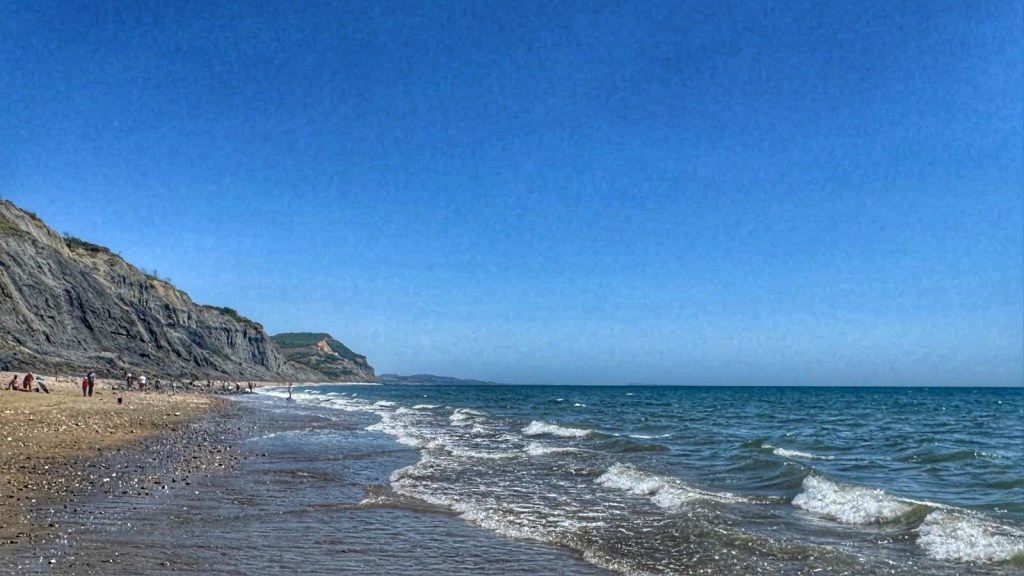
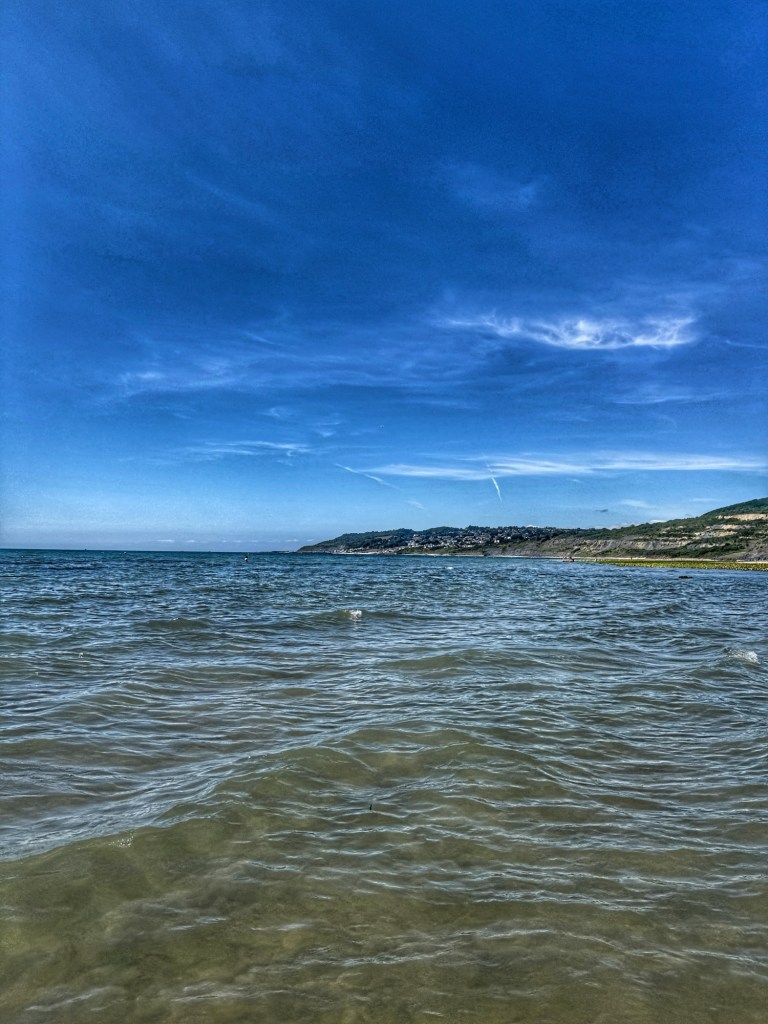
Fossils at Charmouth beach
Gutted to say I didn’t find any fossils, however I was quite occupied playing with the dogs in the sea and just enjoying being there, so just cast fleeting glances at the beach, just in case! However there were many people hunting amongst the rocks and at the base of the cliffs while we were enjoying the sea and sunshine. There were people with hammers bashing the rocks apart to see what they could discover and others just having a rummage. Aren’t fossils amazing!! I remember as a child at Reigate Priory School, there was a school TV channel which got broadcast to all the classrooms. Kids (and maybe teachers) took turns to ‘present’ and have a chat about subjects of their choosing. A friend of mine had a collection of fossils that she’d bought or found on holiday in Dorset and she chose me to ‘co-host’ with her and show off the fossils! Anyway side-tracked again, I do that an awful lot… Let’s go back to Charmouth – I wish I could go back there right now, but for now let’s get back to the blog.
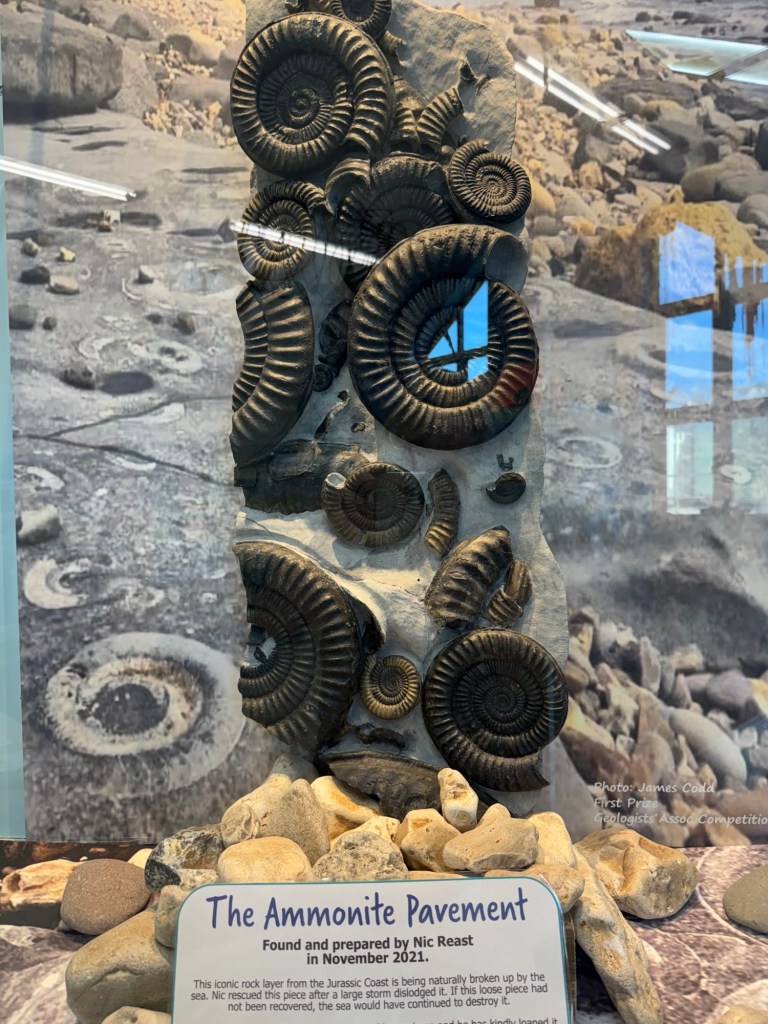
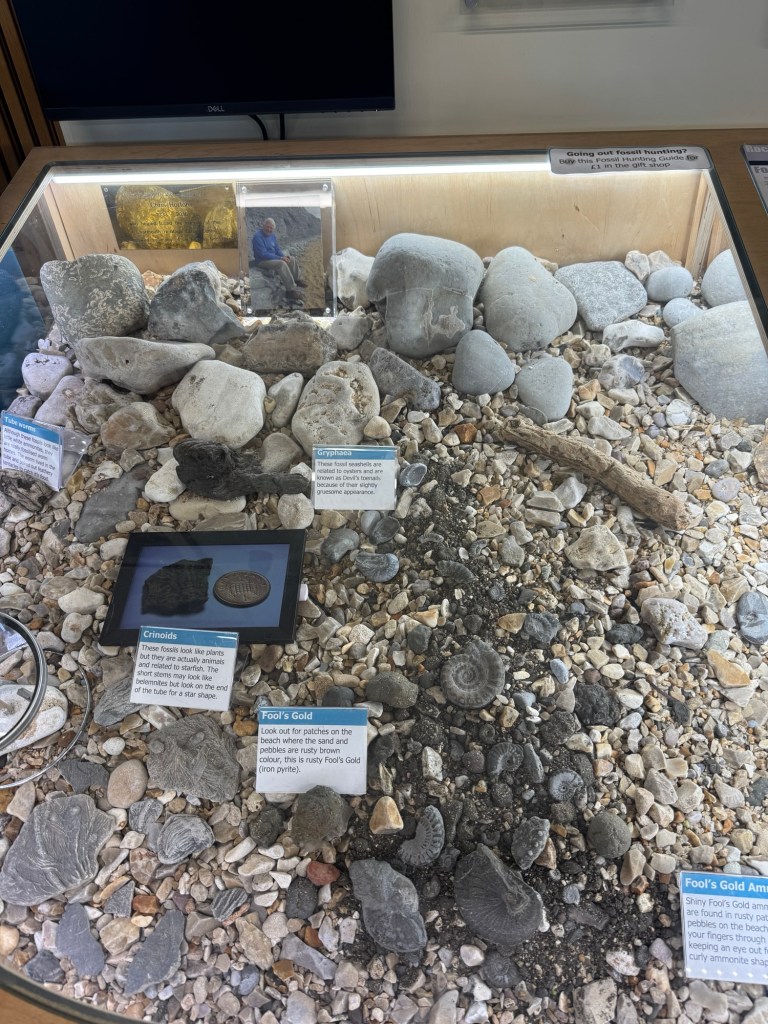
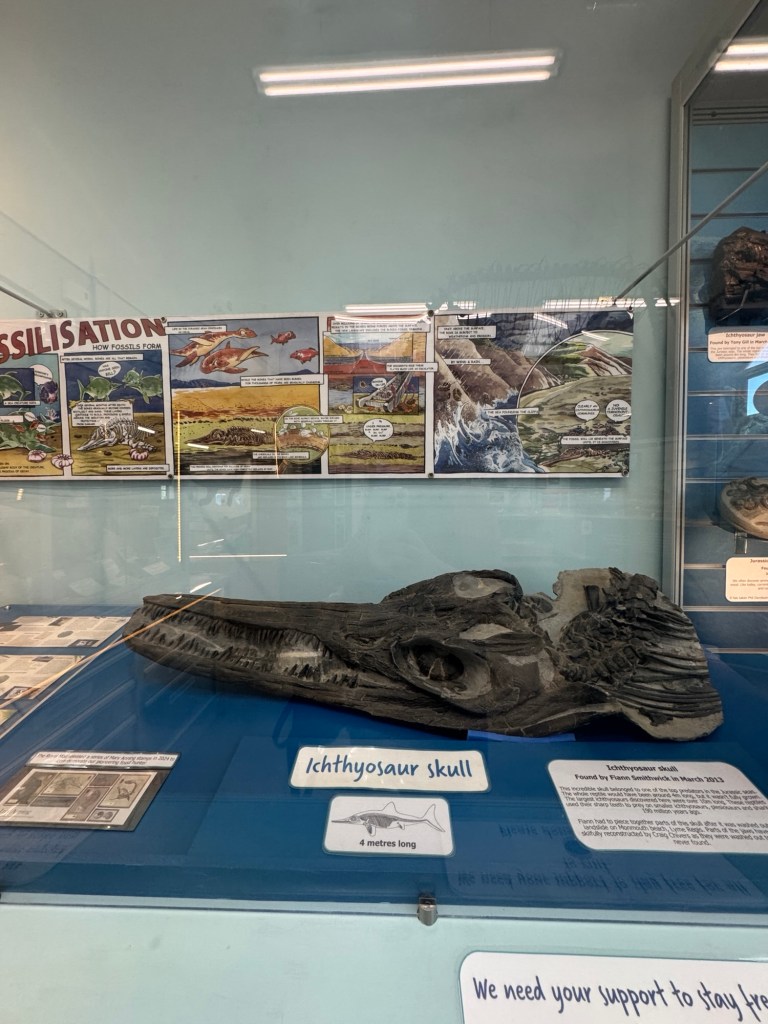
On one side of the River Char is the Charmouth Heritage Centre, which is FULL of fascinating finds. It’s free to get in and definitely worth a visit. It’s upstairs and dogs aren’t allowed so I popped in there on my own to investigate. What a great place to explore – Inside you’ll find facts about some of the creatures that lived in the sea all those millions of years ago, plus some fossils found too – including a section of the ammonite pavement from Monmouth beach (Lyme Regis.) There was also a complete ichthyosaur, which was huge and definitely not something you’d want to come across while swimming in the sea!
Quick history lesson on geological periods
Triassic – 252 to 201 million years ago, which saw the rise of the first dinosaurs.
Jurassic – 201 to 145 million years ago, dinosaurs were the dominant land vertebrates and various species evolved.
Cretaceous – 145 to 66 million years ago, with continued dinosaur dominance and ultimately ended with a mass extinction event.
Back to Charmouth beach again!
If you’re planning a visit to Dorset, I would definitely recommend a visit to Charmouth beach. Bearing in mind that we visited mid-July, it actually wasn’t exceptionally busy, comparable to other beaches that we visited. You have to pay for parking but it’s a very short walk to the beach and was only a couple of pounds for a couple of hours on the beach, it was easy to do via an app on a phone too.
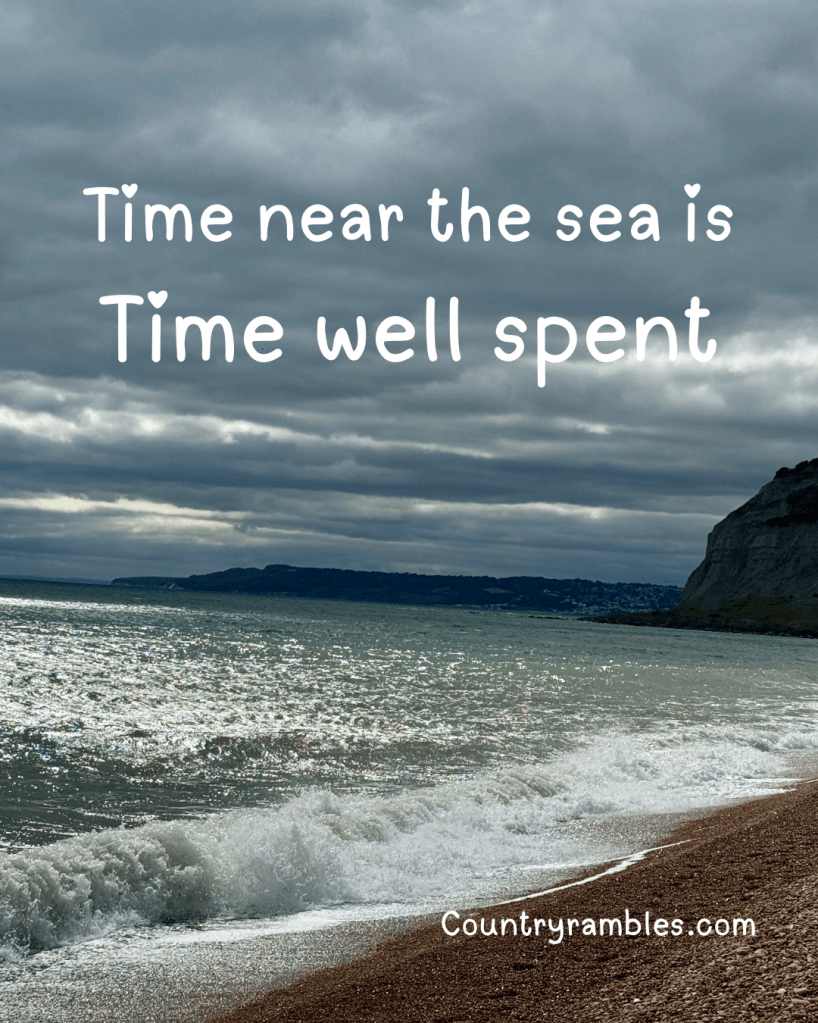
Time near the sea is time well spent
I don’t know if that’s a quote already, but if not, I’d like to claim it! For me personally, there’s just something magical and special about being near the sea. I can’t explain it as well as I’d like to, but when I’m close to the ocean I feel complete, it’s almost like a calling – like it’s where I’m supposed to be. It’s incredibly relaxing, and calming and just feels like a peaceful place – even if you visit on a dull day, when the waves are crashing and the sky and sea are muted tones of grey, it’s dramatic yet it still feels peaceful to me. I love it.
So I hope I’ve convinced you that if you’re looking for something to do in Dorset, you must pay a visit to Charmouth beach, although don’t tell everyone – we don’t want it spoilt by millions of people so there’s no space to enjoy it! (Think Bournemouth beach on a sunny day…)
Here’s what you need to know before you visit Charmouth beach:
- Charmouth beach is located on the Dorset coast, just a few miles from Lyme Regis.
- Pop DT6 6LS into your sat nav/phone – that will take you to the large public car park right by the beach and Heritage Coast Centre. Parking charges apply – you can pay by cash, card or app. The car park does fill up quite quickly but people come and go so you shouldn’t have a problem finding a space.
- Toilets are available near the car park (just behind the Heritage Centre) and include disabled access. There is a small cafe and ice cream kiosk nearby.
- You can hunt for fossils yourself on the beach, (hopefully you’ll have better luck than me!) or you can book a guided fossil walk through the Charmouth Heritage Coast Centre. I think I would have loved to do this if I didn’t have the company of my four legged friends.
- Don’t dig into the cliffs – they’re unstable (as well as protected) and can be prone to rock falls – don’t forget they are millions of years old and nothing lasts forever.
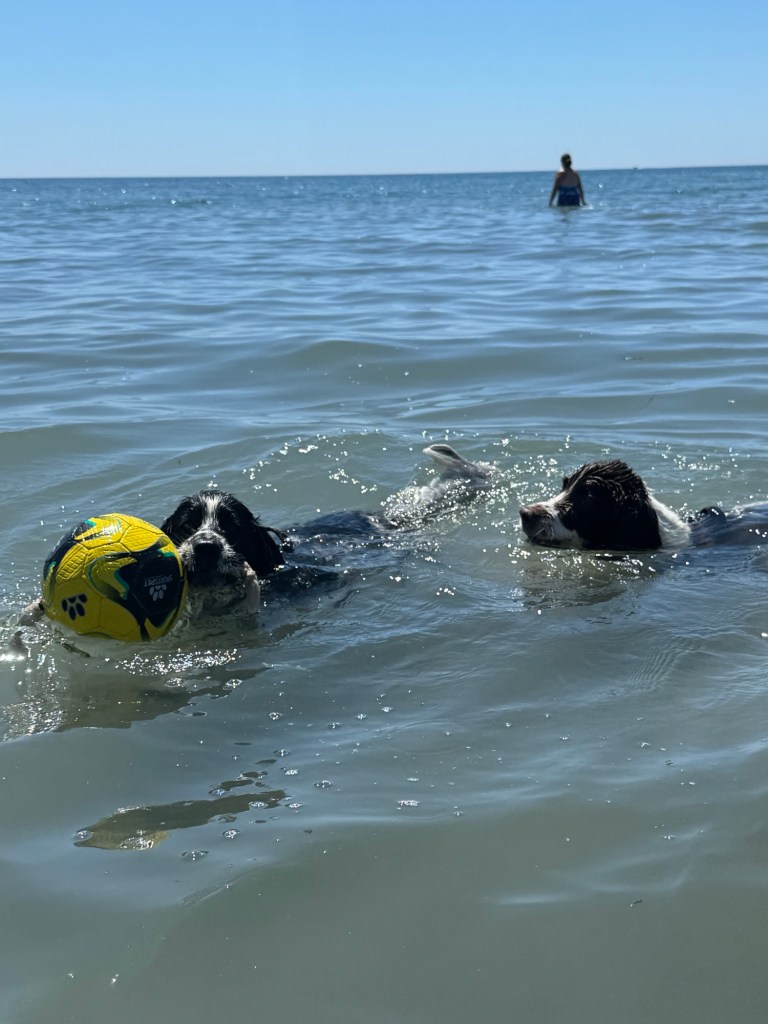
- Wave your paws in the air like you just don’t care – Charmouth beach is dog-friendly all year round – Hurrah!! You can’t take dogs on the beach by the Heritage Centre, but they are allowed off the lead on the beach just across the bridge from the car park, to the east of the mouth of the River Char. This is a decent sized beach and there’s a grassy area just beyond it for dogs to explore too.
- Check tide times before you go – we always try and go to beaches when the tide is out as the water is much shallower and you’ll get a wider expanse of sand.
The Jurassic Coast isn’t just beautiful, it’s extraordinary. Where else can you walk along the beach and literally step through millions of years of Earth’s history? You’ll see dramatic cliffs and hidden coves, experience family-friendly fossil hunting and it’s a fantastic place to take your dogs. There’s something for everyone, so whether you’re a nature lover, keen photographer, fossil buff, or just someone who likes to be beside the seaside, the Jurassic Coast delivers. It’s magical and mystical and you’ll feel engulfed in history!

Why the Jurassic Coast is a Must-Visit
Have you been to Charmouth? Share your finds and tag me in your fossil-hunting adventures on Instagram!
Til next time,
Fiona

 COUNTRY RAMBLES